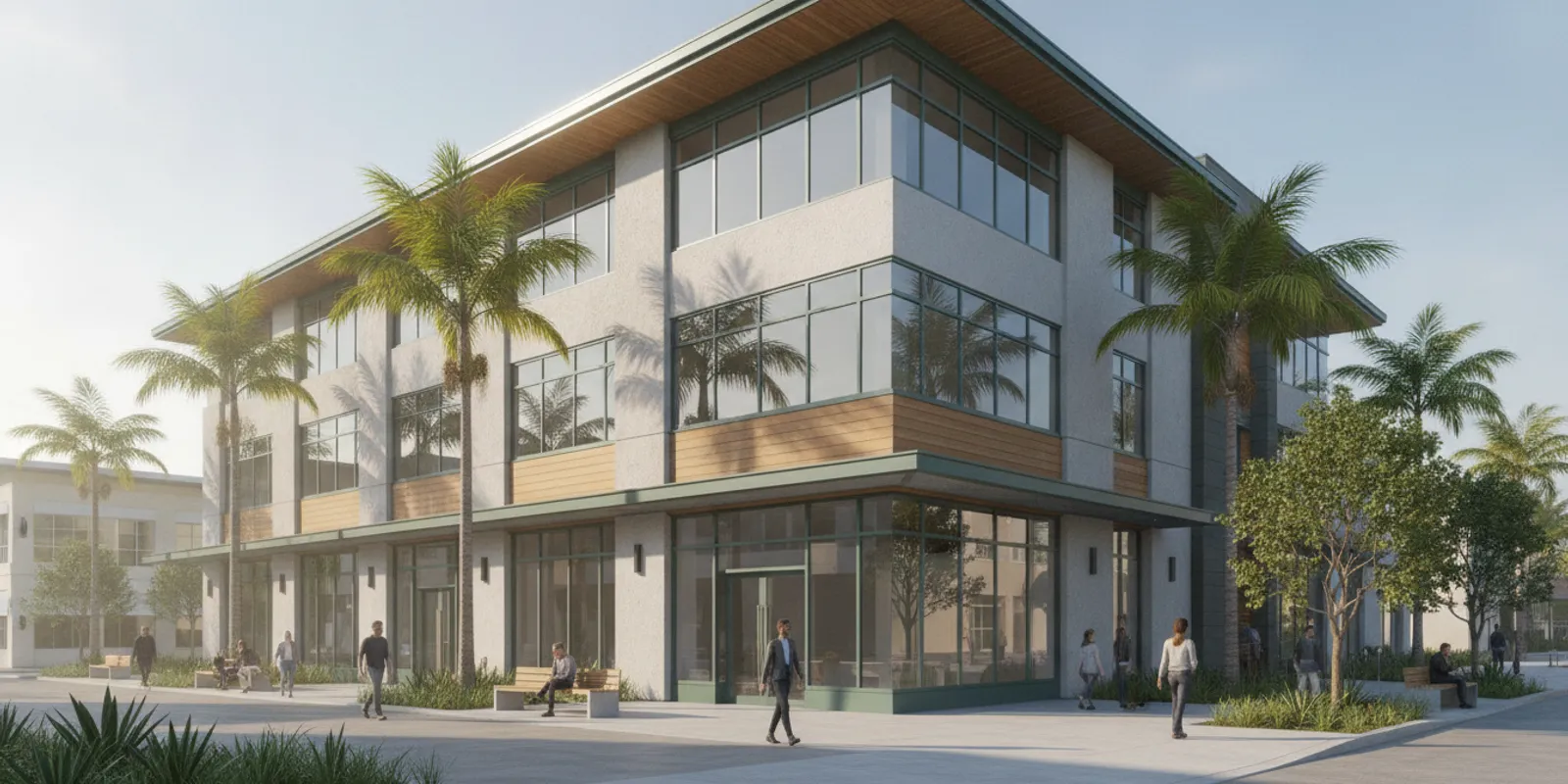
Commercial rental property insurance is not a one-size-fits-all decision. A building with offices, retail tenants, storage areas, or mixed uses can present different property and liability questions. The details of the building, lease, tenant activity, and owner responsibilities all matter. This guide explains how to prepare for a policy discussion without treating general information as individualized coverage advice.
Discuss commercial property management needs
What makes commercial rental property insurance different?
Commercial property describes a broad range of buildings and operations. A small professional office, a retail storefront, a warehouse, and a property with several tenant types do not have identical exposures. Construction, building systems, occupancy, visitor patterns, tenant equipment, and shared areas can all change the questions an insurance professional needs to review.
Begin by separating the issues rather than assuming one policy component addresses everything. Damage to the building, claims involving injury or damage to another person’s property, and interruption to rental income are related but distinct concerns. Limits, exclusions, deductibles, conditions, waiting periods, and documentation requirements may apply differently to each area.
The first step is not to choose a policy from a general checklist. It is to describe the property accurately and ask a licensed insurance professional to explain which available options may fit the property’s specific circumstances. Ask what is covered, what is excluded, what conditions must be met, and what the owner must report when the property or its use changes.
How should property type and tenant use affect the review?
Describe the building as it exists today. Include its general use, approximate age if known, construction details, number of occupied spaces, vacant areas, shared facilities, and major systems. If one property has multiple uses, list each use instead of relying on a broad label such as “commercial.” A mixed-use description that is too general can leave important questions unanswered.
Tenant activity also deserves a specific review. A professional office, food business, retail store, fitness operation, and storage user may have different equipment, delivery patterns, customer traffic, and operating practices. The owner should disclose current and planned uses to the insurance professional rather than assuming that an older description remains accurate after a tenant changes its business.
Lease language can help identify responsibilities, but it should not be treated as proof that a policy will respond to a claim. Review the actual lease provisions concerning permitted use, alterations, repairs, access, indemnity, and tenant insurance with qualified advisers as appropriate. Flag unusual operations, substantial equipment, exterior storage, frequent deliveries, or changes in occupancy for discussion.
The following comparison organizes the information an owner can gather. It is a preparation tool, not a coverage recommendation.
| Area to review | Information to gather | Question for the licensed professional |
|---|---|---|
| Building and property | Construction, age if known, roof and systems, improvements, fixtures, and shared spaces | How does the policy define covered property, and which limits, exclusions, or conditions apply? |
| Tenant activity | Permitted uses, current operations, equipment, visitors, deliveries, and planned changes | Does the disclosed occupancy match the policy’s terms and underwriting assumptions? |
| Liability exposure | Walkways, parking, entrances, common areas, contractors, and maintenance assignments | Which liability exposures should be reviewed, and how do limits and exclusions work? |
| Rental income interruption | Leases, rent schedules, expenses, recovery assumptions, and access concerns | Is income-related protection available, and what triggers, waiting periods, or limits apply? |
| Records and renewal | Photos, inspections, repair documents, prior policy information, and change history | What documentation is needed now and when the policy renews or the property changes? |
Which property details should owners document?
Good records help an owner explain the property consistently. Create a current property file with the address, building description, approximate age if known, floor or space layout, major renovations, roof information, plumbing and electrical details if available, and heating or cooling system information. Include relevant inspection reports, permits, invoices, warranties, and maintenance records. When a detail is unknown, mark it for confirmation instead of guessing.
Photographs can support the file by showing the exterior, entrances, common areas, service areas, parking arrangements, and important building systems where appropriate. Date and label the images so someone reviewing the file can understand what they show. A smaller set of organized photographs is more useful than a large folder of unlabelled files.
Record improvements separately from routine repairs. A replaced roof, upgraded electrical service, new security equipment, accessibility work, or significant plumbing project may be important context for the review. Keep the date, contractor information, scope, and supporting documents together when those records are available.
Owners can also use operational resources to make recordkeeping more consistent. Vantage’s property repair guide and rental property maintenance checklist provide general ways to organize repair and maintenance information. They do not determine insurance coverage, but an orderly maintenance history can make it easier to describe what has been done and what still needs attention.
What liability questions belong in the conversation?
Liability review may involve more than the inside of a tenant’s leased space. Ask how the policy addresses the owner’s responsibilities for common areas, entrances, walkways, parking, lighting, building access, and conditions the owner is responsible for maintaining. Identify who inspects these areas, who receives maintenance reports, and who authorizes repairs.
Make a list of spaces shared by multiple occupants or used by visitors. Depending on the property, that list may include a lobby, stairways, elevators, parking areas, loading zones, sidewalks, trash enclosures, or service corridors. Note whether customers, clients, delivery workers, vendors, and contractors regularly enter the property. Explain how access is controlled and whether any part of the property is open to the public.
Contracts with vendors deserve attention too. Gather agreements for janitorial work, landscaping, security, elevator service, repairs, or other recurring services when requested. A contract may allocate certain responsibilities, but its wording does not independently establish what an insurance policy covers. Ask the licensed professional how contracts, certificates, and other documents fit into the review.
Do not assume a tenant’s insurance replaces the owner’s own coverage needs. The owner should ask what evidence of tenant insurance to request, how often it should be updated, what the lease requires, and how the tenant’s policy relates to the owner’s broader risk review. The answer depends on the documents and policy terms involved.
How should owners think about loss of rental income?
Damage that makes a space unusable can affect rent, operating expenses, and the owner’s ability to meet obligations. However, income-related protection is governed by specific policy terms. Ask whether the policy offers protection for lost rental income, what event must cause the interruption, whether covered physical damage is required, and how any waiting period works.
Also ask about time limits, dollar limits, deductibles, documentation, and the method used to establish the amount of an interruption. Do not assume that rent stops only when a building is completely destroyed. Partial access restrictions, damage to shared systems, or repairs affecting one part of a building may raise different questions. The licensed professional can explain how the proposed policy addresses those situations.
Prepare current leases, rent schedules, operating expense records, and a basic description of how long repairs or access restrictions might take. Avoid treating a rough recovery estimate as a promise. The timeline can depend on the type of damage, contractor availability, permits, inspections, materials, and the work required to restore a space.
Keep this review separate from a general investment forecast. A rent schedule may help describe the property, but it does not predict a claim payment. Ask which financial records the professional needs and how often the owner should update them.
What tenant and lease information should be ready?
Gather a current tenant roster with each space’s permitted use, lease term, renewal status, and key contact information. Note vacancies, known subleases, planned move-outs, and expected changes to occupancy. If a tenant is expanding operations, installing equipment, or changing its business activity, record the change and ask whether it should be reported before it occurs.
Keep copies of the relevant lease documents or the sections requested by the professional. Important provisions may concern permitted use, maintenance, alterations, repairs, access, indemnity, restoration, insurance, and responsibility for damage. Summaries written from memory can omit a qualification, exception, or notice requirement.
A tenant roster should be reviewed on a regular schedule, not only when a claim or renewal is approaching. Compare it with rent records, inspection notes, and property access information. If the records disagree, identify the discrepancy and resolve it before presenting the file as current.
Owners who manage both residential and commercial assets should keep the records and review questions distinct. The operational needs can differ even when the same owner oversees both. Vantage describes its property management services and its commercial property management guide as resources for understanding management responsibilities. Use those materials for operational context, then take policy questions to a licensed insurance professional.
What changes should trigger an insurance review?
An annual renewal is an obvious review point, but it should not be the only one. A change in tenant, permitted use, building ownership, renovation, vacancy, lease structure, or shared-area responsibility may warrant a conversation before the next renewal. The same is true when the owner adds equipment, changes access arrangements, begins a substantial project, or learns that a prior property description was incomplete.
Set up a simple change log with the date, property area, description of the change, documents created, and person responsible for notifying the relevant professional. The log is not a substitute for advice or a claim record. It is a way to avoid relying on memory when several tenant and maintenance events occur at once.
Examples of useful log entries include a new tenant’s permitted use, a completed roof project, a newly shared parking arrangement, a vacancy that lasts longer than expected, or a contractor agreement that changes who performs inspections. For each entry, attach the lease amendment, invoice, inspection note, plan, or other supporting record if available.
How can owners prepare for a policy review?
- Describe the property. Confirm the address, layout, construction details, systems, occupancy, shared spaces, and any mixed-use areas.
- List tenant activities. Record what each tenant does, what equipment or visitor patterns are relevant, and what changes are planned.
- Collect the documents. Assemble leases, amendments, prior policy documents, inspections, repair invoices, permits, contracts, photos, rent schedules, and expense records.
- Separate the exposures. Create distinct notes for building damage, liability concerns, tenant activity, and interruption to rental income.
- Identify unclear information. Mark unknown construction details, missing documents, inconsistent dates, and responsibilities that need confirmation.
- Ask about limitations. Request a plain explanation of exclusions, conditions, deductibles, limits, waiting periods, reporting duties, and documentation requirements.
- Set a follow-up process. Decide who will update the insurance professional when occupancy, operations, leases, or building conditions change.
For general background, owners may review the NAIC property and casualty industry report. The report is sector-level information, not a recommendation for a particular policy, premium, limit, or deductible. Coverage decisions should be based on the property and documents reviewed by a licensed insurance professional.
When can property management support the process?
Property management can help keep operational information organized, coordinate maintenance, track tenant and building changes, and route questions to the appropriate people. Those functions may make it easier for an owner to maintain a current property file. They do not replace insurance advice, determine policy terms, or guarantee a claim outcome.
When comparing management approaches, ask who tracks maintenance requests, how completed work is documented, how tenant changes are communicated, and what records the owner can access. Vantage’s overview of property management responsibilities gives context for those operational questions.
Owners can also ask how a manager handles routine inspections, vendor coordination, lease records, and renewal reminders. The goal is not to make the manager responsible for a coverage decision. The goal is to create a clear handoff so the owner and licensed insurance professional receive accurate, timely information.
Vantage Property Management discusses its company background on its about page. Owners who want to discuss commercial management scope can use the contact page, while keeping insurance recommendations with a licensed insurance professional.
Talk with Vantage about commercial property management
How do maintenance records and vendor coordination support an insurance review?
Maintenance records can help an owner describe the property’s condition, identify recurring issues, and show what work was requested or completed. Keep records organized by property and date, with the location of the issue, a brief description, photographs when appropriate, the action taken, the vendor or person assigned, invoices or estimates, and the completion or follow-up note. These records can give a licensed insurance professional clearer operational context during a policy review, but they do not determine coverage or guarantee a claim outcome.
Vendor coordination records should connect the request to the work performed. Keep the vendor’s scope, relevant contract or certificate information, authorization, communication, invoice, and completion verification together when available. Note whether the work involved a common area, building system, tenant space, or exterior area, and identify any temporary measures or unresolved conditions. Clear records can make it easier to explain responsibilities and the property’s maintenance history without treating a lease, vendor agreement, or log as a substitute for policy advice.
Owners should also keep loss-of-rent documentation current. Depending on the property, this may include leases, rent rolls, payment records, vacancy dates, operating expense records, notices, and a timeline of access restrictions or repairs. Label the records for the affected space and period, and keep supporting documents with the related maintenance or incident file. This information can help the licensed insurance professional understand the property’s income and the events that affected access, but it does not predict whether a policy will respond or how much a claim may pay.
A property manager may support this process by coordinating vendors, tracking maintenance requests, keeping inspection and repair records together, and communicating relevant tenant or building changes to the owner. Ask the licensed insurance professional which documents are needed for the review and how they should be retained. Property-management support can improve organization and handoff, but insurance recommendations, coverage interpretations, and claim decisions belong to the appropriate licensed professional.
Frequently asked questions
Does every commercial rental property need the same insurance?
No. Property type, occupancy, tenant operations, building characteristics, shared areas, contracts, and policy terms can differ. An owner should provide accurate property information and ask a licensed insurance professional to explain the available options for that specific situation.
Does a tenant’s insurance cover the property owner?
Do not assume it does. A tenant’s policy and an owner’s policy serve different purposes, and the terms vary. Ask what evidence of tenant insurance the owner should request, what the lease requires, and how the documents fit into the overall review.
Can a lease decide what an insurance policy covers?
A lease can allocate responsibilities between the parties, but it does not by itself rewrite an insurance policy or guarantee that a claim will be covered. Have the relevant lease language and policy questions reviewed by appropriate qualified professionals.
What should I bring to an insurance review?
Bring property details, tenant and lease information, maintenance and inspection records, photos, prior policy documents, vendor contracts when relevant, and rent and expense records for an income interruption discussion. Ask the professional what additional documents are needed.
Will a property manager choose the right insurance policy?
A property manager may support operations and recordkeeping, but policy advice should come from a licensed insurance professional. Confirm who is responsible for each task and keep the coverage decision with the qualified adviser.
Keep the review current
Commercial rental property insurance deserves another look when building conditions, tenant operations, occupancy, leases, or shared responsibilities change, as well as at renewal. Keep records current, document material changes, and take property-specific questions to a licensed insurance professional before making coverage decisions.