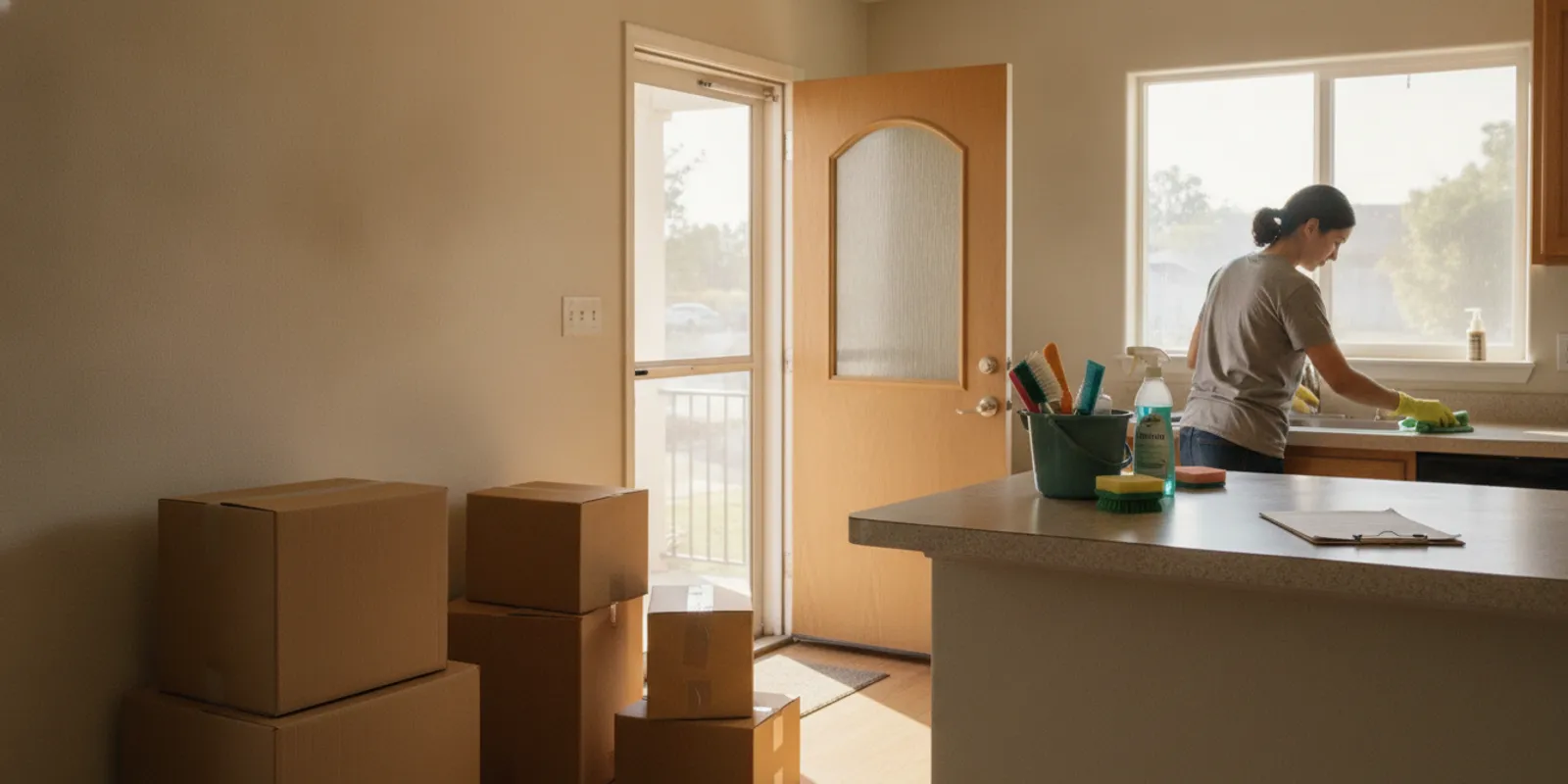
A tenant move out checklist helps renters and owners coordinate the final weeks of a tenancy without losing track of dates, property condition, or access. The useful version is not just a cleaning list: it connects the lease, written communication, handover, and records so both sides can understand what happened. California requirements and individual lease terms matter, so use this as an organizing guide rather than a substitute for current legal advice.
Contact Vantage Property Management
What should you do first when planning a move-out?
Begin with four items: the lease, the intended move-out date, the tenant contact details on file, and any move-in condition report. Read the agreement for notice language, where notice must be delivered, whether it must be written, and instructions for returning possession. If the lease and your understanding differ, ask a clear question in writing before making plans around the date.
Do not assume that a phone call or informal message satisfies a notice requirement. Follow the delivery method in the agreement and keep a dated copy and proof of delivery. California notice rules can vary with the tenancy and circumstances. The California Apartment Association move-in/move-out checklist is a practical reference, but it does not decide the requirements for every situation. For a dispute or uncertainty about legal timing, consult a qualified professional.
Owners and managers should acknowledge the notice and confirm the working handover date, requested key-return method, inspection arrangements, and forwarding-address process. That confirmation is useful for planning, but it should not be treated as a waiver of lease terms or applicable law. Keep the tone factual and avoid promising an outcome before the property has been reviewed.
| Stage | Renter checklist | Owner or manager checklist |
|---|---|---|
| Planning | Review notice terms and identify a proposed last day. | Confirm receipt and document the date being used for coordination. |
| Preparation | Compare the home with move-in records; arrange cleaning and packing. | Locate the lease, condition report, maintenance requests, and prior correspondence. |
| Handover | Remove belongings, photograph rooms, return access items as instructed. | Record returned keys and make dated, factual condition notes. |
| Closeout | Provide a forwarding address and retain records. | Review current requirements and communicate through the proper channel. |
How should renters prepare written notice?
Make the notice easy to identify and act on. Include the rental address, the names of the tenants giving notice, the intended last day, and a reliable way to reach you. Use the delivery method required by the lease. If multiple people signed, check whether the agreement specifies who should provide notice. Keep the notice and delivery confirmation together with the lease.
Ask for confirmation of practical details rather than leaving assumptions unresolved. For example, confirm when the home should be empty, where access devices go, whether a walkthrough can be scheduled, how to report a maintenance issue discovered while packing, and where to send a forwarding address. If the proposed date changes, send an updated written message and keep both versions so the timeline is clear.
Owners should respond with concise written instructions and identify what remains uncertain. A response might confirm that a notice was received, state the proposed inspection window, and ask for a forwarding address. It should not make unsupported claims about deductions, legal deadlines, or the condition of a home that has not yet been inspected.
How can you build a workable move-out schedule?
Work backward from the planned handover date. The schedule below is a planning tool, not a legal deadline; the lease and applicable rules control when specific actions are due. Add reminders for the actual dates that apply to the tenancy rather than relying on a generic calendar.
- Several weeks ahead: Review the lease and records, send notice as required, and ask for move-out instructions.
- As packing starts: Separate items to remove, donate, or dispose of; report any maintenance concern through the usual channel.
- Before the final days: Confirm utility arrangements, the forwarding address, inspection logistics, and key-return instructions.
- After belongings are out: Clean, photograph the rooms, check storage and outdoor areas, and make a final pass for access devices.
- At handover: Return keys using the approved method, request confirmation, and save the communication.
A realistic schedule includes slack for unexpected work. If a cleaner, mover, or repair professional is involved, confirm access and timing rather than assuming the owner will know who is entering. If a delay threatens the handover date, communicate promptly and ask what options are available. Document the response; silence should not be interpreted as approval of a change.
What should the cleaning and repair review include?
Use the lease and move-in records as a reference. Remove personal property and trash, clean the areas included in the rental, and note issues that need attention. A renter should not assume every mark is damage, or that every repair is the renter’s responsibility. Similarly, an owner should compare available records and describe observations without treating an initial impression as a final accounting.
- Empty cupboards, refrigerator, closets, storage spaces, and any assigned parking or outdoor area.
- Clean counters, sinks, bathroom fixtures, floors, and appliance surfaces that were part of the rental.
- Check drawers, cabinets, garage corners, patios, and mailbox for belongings or trash.
- Report an unresolved leak, appliance concern, or other maintenance issue through the established reporting process.
- Keep receipts for work you arranged and do not make an unapproved alteration or repair.
For a specific repair question, ask before hiring someone or changing a fixture. Share the location, what you observed, when it began, and any steps already taken. Owners can keep the move-in report, maintenance history, and move-out notes in one file. Vantage’s rental property repair guide provides related context for owners reviewing repair concerns.
A useful example: if a tenant notices a cabinet hinge loose while emptying a kitchen, a dated photo and a short written report are more useful than an undocumented last-minute repair. The owner can compare the photo with earlier records and decide how the issue should be handled. That process preserves information without jumping to conclusions about cause or responsibility.
How should you document the property’s condition?
Photograph the home after it is empty and cleaned. Take a wide image of each room, then close-ups of any specific condition that might need follow-up. Use good light, capture enough context to locate the issue, and retain original files rather than editing or overwriting them. A short room-by-room note can record the date, location, and what the photo shows.
Compare the final record with the move-in condition report and any maintenance communications. Avoid relying on memory alone. If a condition existed earlier or was reported during the tenancy, keep the message or work record with the matching photo. If something changes between the first walkthrough and key return, make a second dated record and explain the sequence.
Owners and managers should use a consistent process for each turnover. Record factual observations, such as “small stain on bedroom carpet near closet,” rather than a conclusion about who caused it. Keep inspection notes separate from a final charge decision. Include supporting documentation such as applicable invoices or records when relevant, and follow current California requirements for communications and accounting.
Organization matters as much as the number of photos. Name folders by property and date, keep the lease and notice alongside the condition records, and save messages in a format that preserves sender and date. A renter can keep a backup copy outside the phone used to take the images. An owner can store the same set with the tenancy file and limit access to people who need it for the turnover.
What should happen with keys, utilities, and forwarding information?
List every access item before moving day: front-door keys, mailbox keys, garage remotes, gate fobs, and any other device issued for the property. Confirm the return location and method in writing. Do not leave keys somewhere merely because it seems convenient. Ask for confirmation once they have been received, and keep the message with the handover record.
Contact utility providers directly to ask about transfer or shutoff dates. Coordinate the timing with the confirmed handover so service does not end earlier than intended or remain in a name without a clear plan. The right arrangement can differ by property and account, so confirm it rather than assuming the next occupant or owner will take over automatically. Keep the provider’s confirmation for your records.
Provide a forwarding address in writing and retain a copy. This gives the owner or manager a way to send relevant tenancy correspondence, but it does not update your address with banks, insurers, government agencies, or other contacts. Update those accounts separately. Owners should record the date and channel through which the forwarding information arrived, and use it only for appropriate tenancy-related communication.
How can both sides handle inspection and handover clearly?
If a walkthrough is offered or arranged, confirm its time and purpose. Bring the move-in report and a list of questions. The visit can help identify items needing attention, but do not assume that a walkthrough guarantees a particular deposit result or replaces required later communications. If the renter cannot attend, ask whether another arrangement is possible and document the response.
At the handover, both sides can reduce uncertainty by checking a short list: the home is vacant, agreed access items are returned, the forwarding address is recorded, utility arrangements have been discussed, and any immediate concern is noted. Record the date and participants. If a key cannot be returned or an item remains in the home, say so plainly and ask for written next steps rather than leaving the fact unexplained.
Owners should distinguish possession and access logistics from property-condition decisions. Record what was received and when, then complete the review using available documentation. Renters should retain copies of their own messages, photos, receipts, and confirmations. If a disagreement develops, a clear chronology is easier to discuss than scattered notes and recollections.
How should deposit communication be organized?
Keep this part specific and documented. Renters should provide a forwarding address, save the lease and payment records, and retain move-in and move-out photos, receipts, and relevant messages. Owners and managers should review the current California requirements that apply before preparing any accounting or proposed deduction, and communicate through the required method and timeframe.
This article does not set a legal deadline or determine whether a particular cost may be charged. Those questions depend on current law and the facts. Use the external checklist as a general organizational aid and consult the California landlord-tenant law guide for broader context; get qualified legal advice for a specific dispute. Keep questions focused: identify the item, cite the record being discussed, and ask what documentation or explanation is available.
A helpful file index might include: lease and addenda; notice and delivery proof; move-in condition record; maintenance reports; move-out photos; key-return confirmation; forwarding-address message; and deposit correspondence. The index does not prove who is responsible for an issue, but it helps both parties locate the relevant information and respond accurately.
What should owners prepare for the next tenancy?
After possession is returned, review the property, document needed maintenance, confirm access arrangements, and organize the tenancy records. Owners who are clarifying responsibilities for leasing, maintenance, and ongoing operations can review Vantage’s property management agreement. Decide what work must happen before the home is offered again, and coordinate the sequence so cleaning, repairs, and any required review do not conflict. Do not advertise a condition or feature that has not been verified.
Owners who want help coordinating rental operations can learn about Vantage Property Management services. Renters looking for another home can browse available rental properties. The locations page provides information about Vantage’s service presence, and the company overview explains its approach. Use the Contact page’s routing instructions for owner inquiries, rental questions, or maintenance requests.
What process mistakes are easiest to prevent?
Most avoidable confusion comes from assumptions rather than complicated tasks. A checklist can prompt a conversation, but it cannot replace it. Watch for these common gaps:
- Unclear date: Keep the written notice and confirmation together, and flag any proposed change immediately.
- Unapproved key drop: Confirm the return location and obtain a receipt or written acknowledgment.
- Photos without context: Include room views, close-ups, dates, and a note identifying the location.
- Unreported maintenance: Send a timely description through the established channel and retain the reply.
- Utility confusion: Contact providers directly and confirm transfer or end dates instead of assuming another party will act.
- Missing forwarding address: Send it in writing and save the message.
- Premature conclusions: Separate factual observations from decisions about responsibility or deposit treatment.
For example, if a renter plans to leave on Friday but a moving company cannot arrive until Saturday, notify the owner as soon as the conflict is known. Ask whether the handover plan can change and confirm the answer in writing. For an owner, if a walkthrough reveals a concern that is not visible in the move-in record, document its location and gather the relevant history before communicating a conclusion. These small steps keep a practical problem from becoming a preventable misunderstanding.
Frequently asked questions
Does this checklist replace the notice terms in my lease?
No. Use it to organize the process, then check the lease and applicable rules for your circumstances. Seek qualified legal help if you are unsure about a notice requirement or dispute.
Should I take photos before or after cleaning?
Take a complete set after the home is empty and cleaned. If you find a concern while cleaning, photograph it then as well so the record shows when it was discovered.
Can I leave keys inside the unit?
Only if the owner or manager has approved that method. Confirm where and how to return each key and access device, and save written confirmation of the handoff.
What if I disagree with a proposed deposit deduction?
Keep the accounting, lease, condition records, receipts, and messages. Ask a specific question about the item and review current California guidance; consult a qualified legal professional if the disagreement remains unresolved.
Ask Vantage Property Management a question
A move-out is easier to review when dates, condition records, keys, utilities, and deposit communications are handled clearly and kept together.